Quick Summary: Expect to see meaningful SEO results in Australia within 4-12 months. For established websites, significant gains can appear in 3-6 months, focusing on technical fixes and quality content. New sites typically need 6-12 months to build trust and authority with Google for substantial, lasting traffic growth.
Let's cut straight to the chase. If you're asking how long SEO takes to show real, meaningful results in Australia, the answer is generally 4-12 months. For a brand new website, you're looking closer to 6-12 months to earn Google's trust. If your site has been around for a while, you might see solid gains in just 3-6 months. This guide will walk you through the factors influencing your SEO timeline, what to expect month by month, and how a strategic approach can accelerate your journey to achieving significant organic traffic and measurable business growth.
Think of it like planting a tree. The first few months are all about preparing the soil and nurturing the roots—the technical audits, keyword research, and foundational content. You don't see much happening above ground, but this groundwork is everything. This guide will walk you through what to expect and when, so you can understand the journey from planting the seed to enjoying the shade.
Understanding Australian SEO Timelines
"How long until we see results?" It's the first question every Australian business owner asks, and it’s the most important one. The honest answer is that SEO is a marathon, not a sprint. While you might spot some encouraging signs in a few months, the kind of results that actually grow a business—more leads, more sales—typically take between six to twelve months of consistent, smart work.
That timeline isn't just a random number. It's based on the time it takes for search engines like Google to find, understand, and, most importantly, trust your website. For a brand new site, you're starting from scratch, so this trust-building phase is non-negotiable. For a more established business with a bit of a digital footprint, you can often speed things up and see real momentum in the three-to-six-month range.
Why Good Things Take Time in SEO
Imagine you’ve just launched a new e-commerce store out of Melbourne, trying to rank for a term like 'best coffee machines Australia.' You're jumping into a crowded market. A new website has no reputation, no history, and no one vouching for it with backlinks. Getting past Google's "sandbox" period, where it's wary of new domains, is your first major hurdle.
We've seen it time and again. Based on our work with Australian businesses, established websites with some history typically start showing clear positive results within 3-6 months. Brand new domains, however, should realistically plan for a 6-12 month journey to gain proper traction and start competing for those high-value keywords. For a deeper look at the data behind these timeframes, you can read more on typical Australian SEO results.
Setting Realistic Expectations for Your Business
To get a clearer picture of your own timeline, you need to consider where your business fits. Are you a local plumber in Geelong, or a national software company based in Sydney? The competition and scope of your campaign will have a huge impact on how quickly you see a return.
To help you get a better sense of what to expect, here’s a table outlining some general timeframes for different types of Australian businesses.
Estimated SEO Timelines for Australian Businesses
This table gives a ballpark idea of when you might see initial movement (like your keywords starting to climb the ranks) versus when you can expect significant results that directly impact your bottom line (like a steady increase in traffic and leads).
| Business Type | Initial Results (e.g., Keyword Movement) | Significant Results (e.g., Traffic Growth) |
|---|---|---|
| Local Service Business (e.g., Plumber in Geelong) | 2-4 Months | 6-9 Months |
| New E-commerce Store (National) | 4-6 Months | 9-12+ Months |
| Established B2B Company (e.g., SaaS in Sydney) | 3-5 Months | 7-10 Months |
| Highly Competitive Niche (e.g., Finance, Law) | 6-8 Months | 12-18+ Months |
It's important to remember that these are just estimates. A well-resourced, aggressive campaign can definitely speed things up. On the flip side, a limited budget or major technical problems with your site can slow progress down. The key takeaway is that SEO is an investment that builds compounding value over time. The solid foundation you build today will continue to pay off for years.
What Does It Mean When SEO Is 'Working'?
Before we can even ask, "how long does SEO take?", we need to get on the same page about what ‘working’ actually looks like. It’s easy to get fixated on a single, shiny goal, like snagging the number one spot on Google for a huge keyword. But real, successful SEO isn’t a single finish line; it’s a series of meaningful victories that build on each other over time.
Thinking about it this way helps set a realistic pace and allows you to actually see the progress you're making. The question isn't just "is it working yet?" but rather, "what are the signs our investment is starting to pay off?"
Think of it like building a house. You wouldn't draw up the plans on Monday and expect to move in by Friday. SEO works in a similar, phased way, and each stage has its own definition of 'working'.
Laying the Foundation: The Technical Fixes
First things first, you need a solid base. Just like a home needs strong foundations before the walls can go up, your website has to be technically sound. This is all about making sure Google’s crawlers can easily find, understand, and index your site. It’s the least glamorous part of the job, but it’s absolutely critical.
At this early stage, 'SEO working' looks like this:
- Improved Site Health: We're clearing out the cobwebs—fixing crawl errors, dead links, and duplicate content pages that confuse search engines.
- Faster Page Load Speeds: Your pages start loading noticeably faster for visitors, thanks to optimised images and code.
- Better Indexation: You'll see a steady increase in the number of your site's pages getting properly listed in Google's index.
These aren't wins that bring a flood of traffic overnight. But without them, any other effort is built on shaky ground. Getting this right means your site is officially ready for growth.
Building the Frame: Content and Early Rankings
With a solid foundation in place, we can start putting up the framework. In the world of SEO, this means creating and optimising content that speaks directly to your ideal customer. This is where you begin to see the first real, visible signs of life.
'Working' at this point isn't about topping the charts for massive, competitive terms. Instead, it’s about gaining traction for what we call long-tail keywords. These are the longer, more specific search queries people use when they're much further along in their buying journey.
For example, a new furniture store in Sydney won't rank for a broad term like "sofas" overnight. But seeing it pop up on page one for a search like "custom-made 3-seater linen sofa Sydney" is a huge win. It proves the strategy is hitting the mark and attracting highly qualified buyers.
Success here is measured by:
- Ranking for Long-Tail Keywords: Your site starts appearing in search results for those specific, high-intent phrases.
- Early Traffic Growth: A small but definite uptick in organic visitors finding you through these niche searches.
- Improved User Engagement: People are sticking around longer because your content gives them the exact answers they were looking for.
The High-Value Finishes: Authority and Conversions
This final stage is like adding the premium finishes to your home—the custom kitchen, the beautiful flooring, and the designer touches that make it stand out. For SEO, this means building your website's authority with high-quality backlinks and cementing your brand as a trusted leader in your field.
This is when you earn the right to compete for those broad, high-volume keywords that can truly transform a business.
'SEO working' at this advanced stage translates directly into bottom-line results:
- Higher Rankings for Competitive Terms: You're climbing the ladder for the valuable, high-traffic keywords in your industry.
- Significant Organic Traffic: Search engines are now a primary, reliable source of leads and customers for your business.
- Increased Conversions: You're seeing a tangible increase in online bookings, e-commerce sales, or contact form submissions.
Ultimately, what 'working' means comes back to your specific business goals. By understanding these distinct phases, you can track progress properly and appreciate the compounding value of your SEO work long before you hit that coveted number one spot.
The Key Factors That Dictate Your SEO Timeline
So, why does one business start seeing results in six months while another is still waiting after a year? There’s no secret formula, but the answer comes down to a few critical variables that set the pace for any SEO campaign.
Think of it like this: not every car in a race starts from the same position or has the same engine. Some have a long history of winning and a clear track ahead, while others are just pulling out of the garage for the first time. Your SEO timeline really depends on which car you're driving.
Your Website's History and Authority
A website's past performance has a huge impact on its future. If you have an older domain that's been consistently putting out good content, Google already sees you as a trusted source. That built-in authority is something a brand-new website just doesn’t have from day one.
A few things really matter here:
- Domain Age: An older, well-maintained domain has simply had more time to build a track record with search engines.
- Backlink Profile: Think of links from other websites as votes of confidence. A strong, clean backlink profile can seriously speed things up, whereas a history of spammy, low-quality links will put the brakes on your progress.
- Past Penalties: If a site has ever been penalised by Google for using dodgy "black-hat" tactics, the recovery process can add significant time to your SEO journey.
For many tech startups or even multi-location service providers in Victoria, cleaning up past SEO mistakes is the first hurdle. A solid strategy can start showing results in about six months, even with these challenges. However, a site with penalties might need several extra months just for recovery before you see any positive movement at all.
Your Content Strategy and Quality
Content is the fuel for your SEO. Without high-quality, relevant, and well-optimised content, your website has no way to climb the search rankings. Google's entire job is to give people the best answers to their questions, and your content needs to be that answer.
Just churning out generic articles won’t cut it. You need content that proves your expertise and speaks directly to the needs of your Australian audience. Getting this right is fundamental, and learning how to write SEO friendly blog posts can make a massive difference to your timeline.
A fintech startup in Sydney writing in-depth guides on navigating the Australian housing market will build authority much faster than one with generic posts about "saving money." Specificity and real value are what Google rewards.
The Velocity of Your Link Building
If content is the fuel, then backlinks are the high-octane booster. Backlinks (links from other websites to yours) are one of the most powerful signals of authority you can send to Google. A website that consistently earns high-quality links from reputable sources will see its timeline shorten dramatically.
This is where link building velocity comes in—it’s the pace at which you’re earning these valuable links. A slow, inconsistent effort will get you slow, inconsistent results. On the other hand, a steady campaign that earns links from relevant Aussie industry blogs, news sites, and business directories tells Google that your site is an authority worth watching.
Your Industry and Competitive Landscape
Finally, the field you're playing on has a massive influence on your timeline. It's just a fact that some industries are far more crowded and competitive online than others.
Just look at these two examples:
- A Plumber in Ballarat: The competition here is mostly local and moderately difficult. With a focused local SEO strategy, ranking on the first page for "plumber Ballarat" within 6–9 months is a very realistic goal.
- A Fintech Startup in Sydney: This business is up against major banks, established financial giants, and other well-funded startups for incredibly valuable national keywords. Hitting the first page here could easily take 12–18 months or even longer.
The more powerful your competitors are, the more time and effort it will take to catch up and overtake them. The first step in setting a realistic timeline is always a clear-eyed look at who you’re up against.
Your SEO Journey: A Phased Timeline of Results
Thinking about how long SEO takes is much easier when you see it as a journey with distinct stages, not a one-off task. SEO isn't a light switch; it’s more like planting a garden. Different actions yield different results over time, and knowing what to look for at each stage helps manage expectations and spot real progress.
This roadmap breaks down what a typical SEO campaign looks like in Australia, month by month. It shows you what’s happening behind the scenes and the tangible results you can expect, from the initial groundwork right through to achieving sustainable growth.
Phase 1: Months 1-3 — The Foundation and Early Signals
The first three months are all about laying a solid foundation. Think of it as pouring the concrete slab and framing the house before you even think about painting the walls. This stage is heavy on deep analysis, strategic planning, and fixing any critical technical issues.
During this foundational phase, the main focus is on:
- Comprehensive Audits: We conduct in-depth technical, content, and backlink audits to get a clear picture of your site's strengths, weaknesses, and opportunities.
- Keyword Research and Mapping: This involves pinpointing the exact search terms your Australian customers are using and carefully mapping them to the most relevant pages on your website.
- On-Page Optimisation: We start implementing foundational on-page SEO, optimising things like title tags, meta descriptions, and header tags for our target keywords.
- Initial Content Creation: The first pieces of cornerstone content are developed, or we start by optimising existing high-priority pages.
You won’t see a massive flood of traffic at this point. Instead, you'll see clear signs that the groundwork is paying off. Look for improved site health scores in tools like Google Search Console, better indexing rates, and maybe some small, encouraging ranking improvements for less competitive, long-tail keywords.
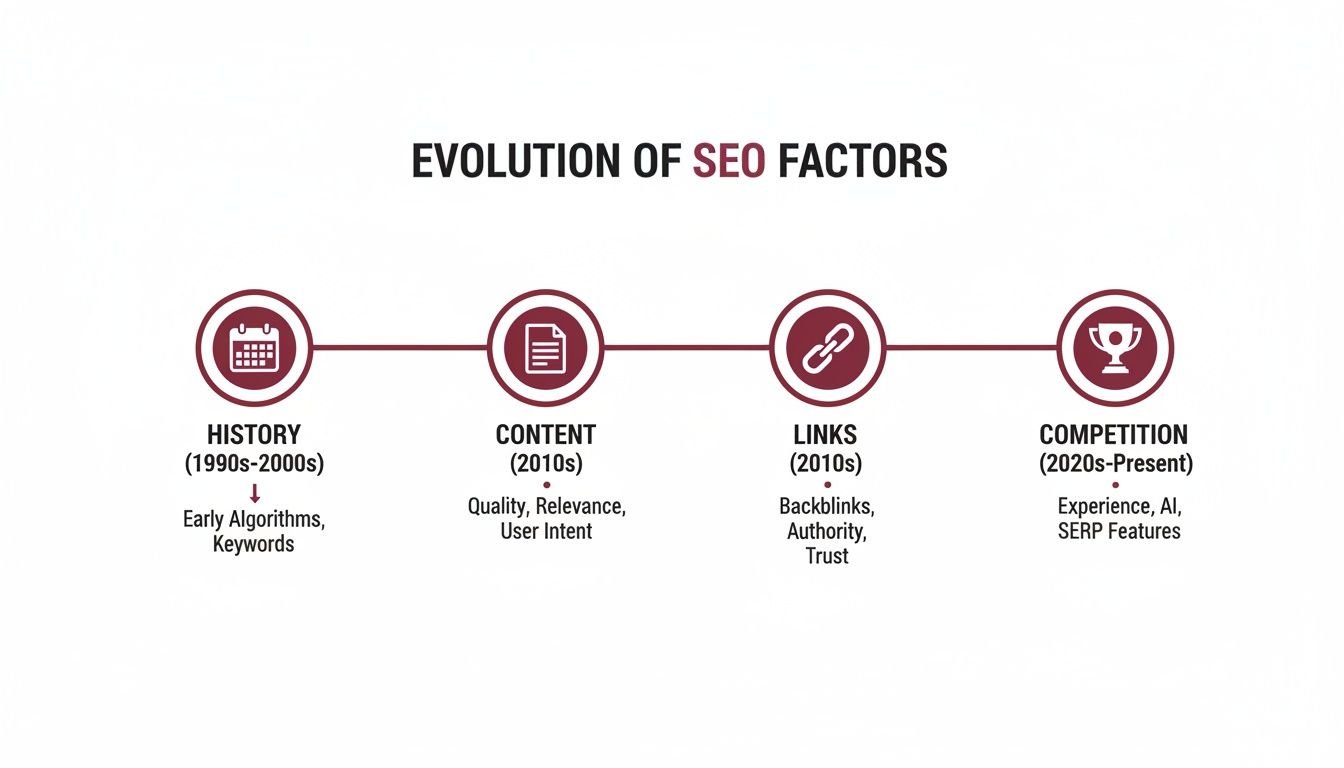
This timeline really shows how front-loaded the technical and content work is, while the consistent effort on link building and watching the competition becomes vital for gaining momentum later on.
Phase 2: Months 4-6 — Building Momentum
Now that the foundation is solid, the next three months are all about building momentum. This is where your content strategy and early link-building efforts start to compound, creating much more visible results. We're moving from preparation to active growth.
At this point, your strategic content plan is in full swing, and the first link-building campaigns are starting to show their value. You’ll begin to notice your website's presence growing in the search results—it’s no longer invisible.
This is often the most exciting phase for a business owner. You start to see specific pages climbing from the dark depths of Google onto the first few pages for meaningful search terms. It’s the first real proof that the strategy is working and is on track to deliver genuine business value.
Expect a noticeable increase in organic traffic, often from longer, more specific search queries. You might even get your first few leads or sales that are directly attributable to these newly ranking keywords.
Phase 3: Months 7-12+ — Achieving Authority and Growth
This is where the real transformation happens. All the consistent effort over the past six months has built a strong base of authority and relevance in Google's eyes, allowing you to start competing for the more valuable, high-traffic keywords.
Your website is now becoming a well-oiled machine. Rankings for high-value, competitive keywords start to cement themselves on the first page. Organic traffic turns into a reliable and predictable source of leads and sales, and your site establishes itself as an authority in your niche within the Australian market.
Imagine a local plumber in Sydney’s crowded market chasing ‘emergency plumber Sydney’. While some niches might see quick wins, our experience and various Australian SEO case studies show that it typically takes a full year of dedicated optimisation for most businesses to achieve that kind of massive, sustained growth.
To give you an even clearer picture, here’s a breakdown of what to expect throughout a typical campaign. This table outlines the key activities and the performance indicators you should be tracking as your SEO strategy unfolds.
SEO Campaign Milestones and Expected Outcomes
| Timeframe | Key Activities | Expected Outcomes and KPIs to Watch |
|---|---|---|
| Months 1-3 | Technical audit & fixes, keyword research, on-page optimisation, initial content creation, Google Business Profile setup. | Improved site health score, better indexing rates, small ranking shifts for long-tail keywords, more local map visibility. |
| Months 4-6 | Consistent content production (blog posts, guides), foundational link building, user experience (UX) improvements. | Noticeable increase in organic traffic (15-30%), rankings appear on pages 2-3 for target keywords, first SEO-driven leads/sales. |
| Months 7-12+ | Advanced content (case studies, tools), targeted link acquisition, authority building, conversion rate optimisation (CRO). | Significant organic traffic growth (50%+), first-page rankings for high-value keywords, reliable lead flow, positive ROI. |
Watching these milestones helps you understand that SEO is a process of accumulation. Each phase builds on the last, leading to the strong, consistent results that can truly grow a business.
How to Accelerate Your Australian SEO Results
Patience is a core part of any successful SEO campaign, but that doesn't mean you should just sit back and wait. While there are no genuine shortcuts to overnight success, you can absolutely make smart, strategic moves to get meaningful results faster. This isn't about black-hat tricks; it's about being efficient and knowing where to focus your energy first.
Think of your SEO campaign like a professional cycling team competing in the Tour Down Under. Your foundational work—solid technical SEO and consistent content—is your endurance rider, built for the long haul. But to really pull ahead of the pack, you need to execute some tactical sprints.

Target Low-Competition, High-Intent Keywords First
It’s always tempting to aim for the big, high-volume keywords right out of the gate. The problem is, these are usually dominated by long-established players. A much smarter—and faster—way to get traffic and sales is by targeting long-tail keywords.
These are longer, more specific phrases that, while having less search volume, carry a much higher intent to purchase or enquire. For instance, a new law firm in Melbourne shouldn't bother with "lawyer Melbourne" initially. Instead, focusing on a term like "no win no fee personal injury lawyer Clayton" is a game-changer. The person searching for that isn't just browsing; they have a specific problem and are ready to act.
Getting these quick wins on the board gives you crucial momentum.
- You start generating early traffic and leads, which proves the campaign’s value from the get-go.
- It helps you build topical authority in a specific niche, making it easier to rank for bigger terms later on.
- You get real-world data on which search terms actually convert for your business.
Create Genuinely Link-Worthy Content
Backlinks are pure ranking fuel. But nobody links to average content. To get those high-quality links that Google loves, you need to create exceptional link-worthy assets—pieces of content that other websites feel compelled to share and reference.
Creating link-worthy content isn't just about writing a good blog post. It's about creating a resource so valuable that it becomes the go-to reference in your industry. This is how you shift from chasing links to earning them naturally.
Here are a few ideas for content that naturally attracts backlinks:
- Original Research and Data: Run a survey in your industry and publish the results. A Perth real estate agency could create a report on "The Top 10 Most Affordable Suburbs for First-Home Buyers in WA." This becomes an instant source for news articles and blogs.
- Comprehensive Guides and Tutorials: Put together the ultimate guide on a topic your customers struggle with. A Brisbane-based accounting firm could create an exhaustive guide on lodging a BAS statement for sole traders.
- Free Tools and Calculators: If it fits your business, a simple online tool that solves a common problem is a link magnet. A mortgage broker could build a free home loan repayment calculator that people will use and share.
Yes, this kind of content takes more effort. But the payoff in high-authority backlinks is massive and can dramatically shorten your time to the top of the search results.
Launch a Targeted Digital PR Campaign
Creating amazing content is only half the battle; you can't just wait for people to find it. A digital PR campaign is the proactive step of getting your best content in front of journalists, bloggers, and industry leaders across Australia.
The goal is to earn high-quality backlinks and brand mentions from trusted, authoritative websites. If you want to get results faster, understanding the difference between link building vs link earning is crucial. Earning links through a solid PR push is one of the most powerful ways to build trust with Google—and do it quickly.
Integrate SEO with PPC and Social Media
Your marketing channels should never operate in silos. When you integrate your SEO efforts with Pay-Per-Click (PPC) ads and your social media activity, you create a powerful flywheel that accelerates results across the board.
- SEO + PPC: Use a PPC campaign to quickly test which keywords and ad copy resonate most with your audience. The data you gather on what converts can then inform your long-term SEO strategy, so you’re not guessing which terms to prioritise.
- SEO + Social Media: Promote your new SEO content on all your social channels. This drives immediate traffic and encourages shares. While social signals aren't a direct ranking factor, they lead to more eyeballs on your content, which in turn leads to more backlinks and brand awareness.
By combining the marathon strength of SEO with the immediate sprint of PPC and the broad reach of social media, you build momentum far more quickly than by focusing on SEO alone. You stop just waiting for results and start actively creating them.
Frequently Asked Questions About SEO Timelines
Even with the best roadmap, a few questions always come up. It's only natural. Here, we tackle the most common queries we hear from Australian business owners about SEO timelines, giving you the straight answers you need to set realistic expectations and feel confident in your strategy.
Can I Really Get SEO Results in One Month in Australia?
Honestly, no. While we can get technical fixes indexed and showing improvements pretty quickly, achieving meaningful results—like a flood of new traffic or top rankings for the keywords that matter—simply doesn't happen in 30 days. Good SEO is about building genuine authority and trust with Google, and that's a process you just can't rush.
Think of it as a major red flag if an agency promises you page-one rankings in a month. They're likely cutting corners or using risky tactics that could get your website penalised down the track. The first month is all about laying a solid foundation with audits, strategy, and crucial fixes—it’s the groundwork, not the grand opening.
Why Did My Traffic Suddenly Drop After Starting an SEO Campaign?
It can be alarming to see a dip in traffic right after you’ve kicked off an SEO overhaul, but don't panic. It’s actually quite common and usually temporary. This often happens when Google's crawlers encounter significant changes, like a new site structure or a major content update, and need to re-index and re-evaluate everything. Think of it as Google taking a moment to recalibrate its understanding of your new and improved site.
These small fluctuations are typically short-lived and are often the precursor to a strong, sustained climb. Once Google processes the improvements and recognises you’re offering a better experience for users, you’ll see your rankings and traffic start to head in the right direction. It's often a sign that real, positive changes are underway.
Does a Bigger Budget Guarantee Faster SEO Results?
A larger budget definitely acts as an accelerator, but it's not a silver bullet. Investing more lets us do more, faster. It means we can produce more high-quality content, run a more ambitious link-building campaign, and throw more technical resources at optimising your site—all at the same time.
However, money can't instantly buy the trust and authority that Google values. That has to be earned over time. A bigger budget helps shorten the timeline by allowing us to complete more work in parallel, but it doesn't remove the fundamental need for patience and a consistent, quality-focused effort.
Key Takeaway: Think of your SEO this way: exceptional content is your high-performance engine, but backlinks are the high-octane fuel that makes it win the race. You can’t perform without a great engine, but you won't get far without the right fuel. The two work together as a powerful team.
In the first few months, the focus is squarely on creating that incredible content and nailing your on-page SEO. From month four and beyond, a smart backlinking strategy becomes the key to amplifying that content and building the authority you need to compete for the top spots.
At Anitech, we believe in transparent, data-driven SEO that delivers real, measurable growth. If you're ready to build a powerful organic presence in the Australian market, schedule your free consultation and let our experts create a strategy that works for your business.